Your Cart is Empty


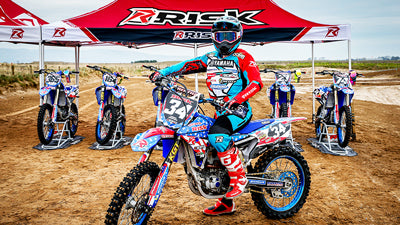
Walk through the pits at any motocross race and every rider looks suited up for battle: helmet, goggles, boots up to the knees, and armor under the jersey. If you are new to the sport, that pile of gear can look like overkill, and it adds up fast. Some of it the rulebook requires, and the rest is cheap insurance against the injuries riders see most. So what gear do you need for motocross?
The motocross protective gear every rider needs is a full-face helmet, goggles, boots, pants, a long-sleeve jersey, and chest and back protection. The AMA requires all six to race. Gloves, a neck brace, and knee braces protect your hands, neck, and knees.
Keep in mind that all this gear must be specifically designed for motocross or dirt bike riders. A motocross track throws a lot more at you than a cross country trail ride, and during a race a rider’s entire body is exposed to sudden crashes. Let’s go through it piece by piece, starting with the most important one.

A full-face helmet is definitely the most important part of a rider’s protective gear, and the AMA and FIM rulebooks both require one. It is essential that you invest in one, as open face and three quarter type helmets won’t protect your face and chin when you fall or crash.
According to the World Health Organization, head trauma is the leading cause of death for motorcycle riders, and a safe, quality helmet reduces the risk of death by over six times. Those numbers come from road riding, but your head is just as exposed on the track. So if you’re wondering if it’s worth spending so much money on a high-quality, full-face helmet, the answer is a resounding yes!
It is important to choose the right helmet, as street and dirt helmets are purpose made. A motocross helmet has a peak, a big eye port for goggles, and a chin bar with room to breathe. Let us look at the key features you need to look out for when choosing the best full-face helmet for motocross. For a deeper dive, see our ultimate dirt bike helmet guide.
It is crucial that you don’t take any risks while choosing the right helmet, even if you find the price way over your budget. Your helmet must carry a label showing it meets a recognized safety standard, and the organization you race with decides which ones count, so check your series rulebook before you buy.
If you race an AMA event in the USA, the American Motorcyclist Association (AMA) rulebook accepts helmets labeled Snell M2020 or M2025 (including the D and R versions), DOT FMVSS 218, ECE 22-05 or 22-06, JIS T 8133, or the FIM’s FRHPhe-01 or FRHPhe-02. Older Snell labels (M2005, M2010, M2015) are not on that list.
If you race in the UK, you’ll need an ACU-approved helmet. The Auto-Cycle Union (ACU) Gold sticker must now be on the helmet before you arrive at the event, because it can no longer be applied on site.
Another aspect you will want to pay attention to is the ventilation. Good quality helmets have multiple vents which will ensure you get a good circulation of air, and that matters in a sport this physical. A helmet that carries a recognized standard label has met that standard’s impact test, whatever its vent count, so pick the airflow you like. Fit and condition matter more than the number of vents.
It is also critical that you buy one that fits your head perfectly. Measuring your head and double-checking the fit is a must. This is because not wearing the right size can increase your chance of a severe head injury, as it can get dislodged if you crash. If you are not sure about the right size for your head, measure around your forehead and check it against the helmet maker’s own size chart. However, you will still need to make the final decision after trying out the helmet yourself.

Racing boots are poles apart from regular boots and can be just as essential as helmets for protection. They offer protection to your feet, ankles, shins, and calves, and the AMA requires boots at least eight inches tall. When it comes to motocross, your legs are in the line of fire for injuries. Racing boots will protect you from the impacts of crashing and limit how far your foot can twist or bend.
Just like helmets, boots are no good unless you get a pair that fits you like a glove. Ill-fitting boots can interfere with your riding and end up causing a lot of discomfort. Also, remember that racing boots can take some time for you to break into them, so you probably will find them more comfortable after using them a couple of times than you do in the beginning.
When it comes to boots, you need to pay attention to its ergonomics, which will affect your entire racing experience. Make sure the boots allow you to move your ankles freely to a certain extent while ensuring that they prevent hyperextension and hyperflexion.
Don’t expect motocross boots to be light. A good pair runs around four pounds per boot, because the stiff shell and plates are where the protection comes from. Find a pair stiff enough to protect you that still lets you work the shifter and brake.
If you are not sure about what boots to buy, our guide to the best dirt bike boots and what to look for walks you through it.

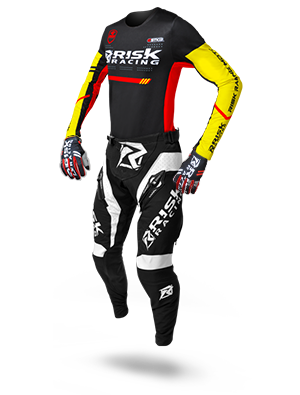
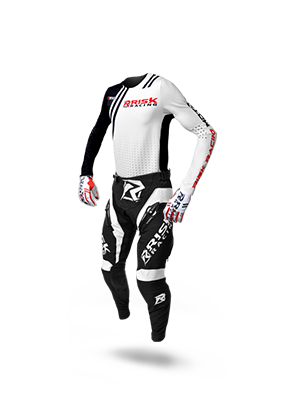
Your jersey, pants, and gloves are your motocross protective clothing, the first layer between you and the dirt. All racing jerseys act as a protective layer to prevent your skin from getting scratched to a certain extent. They are typically full-sleeved and also protect your skin from sunburn, and the AMA requires a long-sleeve jersey to race. It is advisable to use a jersey designed for motocross or dirt bike racing, as these will prove to be more abrasion resistant than regular jerseys.
When it comes to sizing, it is important that you do not go for a loose or baggy fit (if that’s usually your style) as these can easily get caught or pulled while riding. Find something that fits you perfectly and is suitable for the activity.
Our VENTilate PRO jerseys use a lightweight, 4-way stretch fabric that breathes and wicks sweat, with large side venting from hip to wrist to keep you from overheating.

Dirt bike pants are essential as their material prevents them from tearing easily, and the AMA requires pants made of leather or another durable material. They also give you freedom of movement and, unlike jeans, don’t restrict you.
An important feature of dirt bike pants is that they usually have leather or reinforced panels around the inner knee. This part of the body often tends to rub against the dirt bike and is near the exhaust pipe of the motorcycle, which causes it to need additional protection. Apart from protecting the knee, it also gives extra grip to the rider.
Motocross pants are slightly different from your regular pants when it comes to the fit. Most dirt bike pants come with waistband adjusters via velcro or buckles. This way, you can either tighten or loosen it till it is absolutely perfect.
When it comes to the length, they are cut to work with tall motocross boots, so they won’t bunch up around the boot tops. They are also a little extra loose around the knees to aid you in flexible movement and to make room for knee braces. If the pants are too tight, it can feel restricting while riding.
In short, when looking for a pair of high-quality dirt bike pants, make sure they fit you well, offer comfort and flexibility, work with your boots and knee braces, and have leather or reinforced panels at the knees. Most motocross pants don’t have armor built in, so riders add knee braces and impact shorts underneath.
Still wondering whether motocross pants beat a pair of jeans? We answered that in Are Dirt Bike Pants Worth It?
Our VENTilate PRO motocross pant has intake and exhaust vents on the front and back of the legs that you open when it’s hot and close when it’s cold, a 3-point waist adjustment with a micro ratcheting closure, leather inner knee panels, and a cut that works with or without knee braces.

Dirt bike gloves help prevent cuts, bruises, burns, and abrasions. They also give you a better grip. Their padding helps lessen the vibration you feel in your hands, thereby increasing your efficiency and endurance. The AMA recommends gloves, and almost every racer wears them.
They are usually made of breathable and stretchy fabrics and can be thin or thick, depending on your preference. If you would like the added protection, you can go ahead with thick gloves with extra padding. Just ensure that they are made of a strong, abrasion-resistant material!
If you want a thin, lightweight glove with a lot of feel for the bars, our VENTilate PRO gloves are sewn with pre-curved fingers and knuckle reliefs, with a silicone coating over the single-layer palm and fingertips for grip.

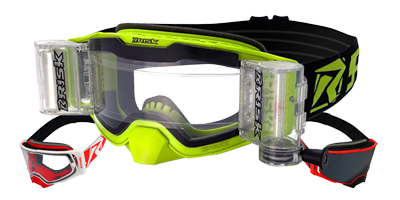
Motocross goggles protect your eyes from the wind, dust, rain, and debris, thereby increasing your visibility, and the AMA requires shatterproof goggles or a face shield. Just make sure that they fit comfortably inside your helmet. When it comes to choosing a good pair of goggles, the first thing to consider is size. Most companies offer goggles with large lenses to increase peripheral vision.
One of the most common problems with dirt bike goggles is that the lens may fog up if it doesn't have good ventilation. For this reason, it is essential to buy good quality goggles that ensure anti-fogging ventilation.
You can even get tinted goggles if you usually ride in the hot sun. There are a variety of tints to choose from, ranging from a full mirrored lens to a hybrid lens that can be useful during sunny and cloudy conditions. When the track turns muddy, tear-offs or a roll-off system keep your vision clear; here is how tear-offs work and how to install them.

When buying goggles for motocross racing, make sure you look for good comfort, clear vision, and sweat absorption. Our J.A.C. MX goggles have anti-fog, scratch-resistant lenses, multi-layered foam that wicks sweat away from your eyes, and a removable nose guard, and the V3 comes as a roll-off kit.
For muddy motos, the RIPPER works with almost any roll-off goggle and advances the film in as little as one second, so you never take a hand off the bars.

Although neck braces weren’t very popular among riders in the past, they have become quite a common sight in recent years. A neck brace is designed to limit how far your head can move relative to your shoulders in a crash. Many companies have started designing low profile and comfortable braces to fit the rider’s neck smoothly without hindering it.
The AMA recommends neck braces but does not require them, and the proof is still thin. Action Sports EMS, a trackside ambulance service, reported far fewer serious neck injuries among riders wearing braces, but that report was not peer reviewed. Treat a brace as an extra layer of protection, not a guarantee.
Choosing the right size is crucial when it comes to neck braces, as having a size that is too small or big can end up restricting the head movement of a rider. This can end up causing more harm than good for a rider, especially during a crash. A high quality, well-fitting neck brace will let you move your head normally without restriction, and it has to work with your helmet and chest protector.
Always choose a neck brace that can be adjusted to suit your size as this will help you find the perfect fit and position which is most comfortable for you. Also, purchase a neck brace, which is light in weight as that will prevent you from feeling any added strain on your shoulders and neck.

Body armor (or body armour, as British riders spell it) protects your chest, ribs, and spine. The AMA requires chest and back protection and says it should cover your sternum, ribs, and spine, so a jersey alone won’t cut it. When it comes to body armor, there are quite a few decisions you will need to make before buying one. Let’s look at your best options below.
People often confuse roost protectors with chest protectors. A roost protector is a lightweight deflector that is meant to protect you from rocks and other debris that may be found on the track. Many riders prefer roost protectors as they are easier to wear and do not make the rider feel too hot.
However, a front-only roost deflector won’t cover your back, so it won’t meet the AMA rule. Some modern roost deflectors are built as full vests with impact-rated chest and back panels, so check the coverage and the rating on the label rather than the product name. If you know that your track and race are quite dangerous, you may want to think twice before choosing a roost protector over a chest protector.
Chest protectors are made of sturdy materials and can be a little uncomfortable in the beginning (especially if you’ve never worn a chest guard before). But if you invest in a high-quality brand, you’ll be able to find one that gives you extra protection with adequate comfort and ventilation too.
Riders who wear chest protectors will have more peace of mind in a crash. Chest protectors also act as roost deflectors and shield your body from flying debris. Just make sure you choose armor that will provide proper ventilation and absorb your sweat.

Knee ligament injuries are a documented risk in motocross. Many riders wear knee braces to help protect the ligaments (knee pads only cushion impacts), and the AMA recommends braces. The evidence that braces prevent injuries is still limited, and one case report describes thigh fractures just above the top edge of rigid braces, with the authors calling for better brace design. Choose a well-fitted brace from a reputable maker.
When choosing the right knee brace, it is good to go for brands that make custom knee braces to fit your knee perfectly. This is because most riders find it quite hard to find a knee brace that fits them comfortably. A custom-made brace will give you enough room to flex your knees.
Good brands design knee braces that are strong and sturdy but also light in weight. Heavy knee braces can end up being a great hindrance to the rider.
Additionally, you can invest in brace sleeves, which you can wear underneath your knee braces. This will prevent the knee brace from rubbing against your knee and causing discomfort. Brace sleeves also absorb excess sweat and add to your comfort.
Guarding yourself with your arms when you fall is one of the most natural reactions. Having elbow guards (or elbow pads) can minimize the damage your arms face during any fall or crash. They pad your elbows against abrasions and impacts.
It is wise to buy an elbow guard fixed using straps, as this will prevent the guard from moving when you’re riding. It will also ensure that the guards stay in place during a fall. Some dirt bike elbow guards come with a bicep cuff, which is an extra precaution to prevent the guard from moving.
Elbow guards usually come in two types: hard shells and soft shells. Let’s look at the benefits of each below.
These are designed to be lightweight and also give you a lot of room to move freely. If you happen to ride for very long distances, soft shell guards will be ideal as they do not cause any restriction and are so flexible that you may not even notice they’re there.
A hard shell guard usually comes with a solid structure to it. These are great as they can absorb the impact of crashes and falls. On the downside, these guards don’t offer the same amount of flexibility as soft shell guards. They may also be a little heavier than soft shells due to their thick inner foam lining and hard plastic.
If you place safety above comfort, you will definitely want to go for hard shell elbow guards. Just make sure that you buy high-quality guards that will provide comfort, freedom of movement, and protection. Also, ensure that they can be adjusted to fit your arm and elbow perfectly to avoid wasting your money on equipment that does not precisely fit your body.
You can never be too safe when dealing with a sport like motocross, so it is worth taking the time to know all the various protective measures you can invest in before hitting the track. Here is the extra protective equipment you can add on top of the essentials above.

Hand guards mainly protect your hands and levers from roost, branches, and debris. Plenty of riders skip them on a motocross track, but some riders do go the extra mile to protect every inch of their body!
There are two types of handguards, which are off-road and motocross handguards. Off-road guards wrap around with a metal bar to fend off brush and protect the levers, while motocross handguards are usually open-ended plastic meant to deflect roost.
Check your class rules before you bolt on wrap-around guards. The AMA does not allow wrap-around metal hand guards in Limited classes, which only permit open-ended plastic guards. Just be sure to get the right size and check if the guards cause no discomfort to your hands when you ride.

When you spend many hours on the track, your palms are bound to get blisters and scratches that can affect your performance while racing.
Certain riders use palm protectors under their gloves to reduce the vibration and give extra protection against blisters. Our Palm Protectors are a great option if you wish to wear them underneath gloves. They come in 3 sizes and are ultra-thin, which makes them hardly noticeable when worn under gloves.
Impact shorts can come in handy when you meet with accidents in motocross. They are called impact shorts as they give impact protection when you fall or hit yourself. They are padded, but they are designed to be worn under your pants without getting in the way.
They primarily give protection to the thighs, hips, and tailbone regions. They are usually quite stretchy and are made of breathable materials to prevent excessive sweating. Though they are padded, they are not too bulky as they are meant to be worn under riding pants.

It goes without saying that you need to wear socks inside your riding boots. However, you may think that using your everyday socks would suffice. While this may be true, you may want to also consider the durability of normal socks and how long they’ll last when used for a sport like motocross.
Though it may seem excessive, you’ll actually be saving money by investing in a good pair of sports socks. Many companies manufacture motocross socks, which are meant to be used for extreme sports and not wear out easily. These socks will not be slippery and will stay in place while also wicking moisture and ensuring your feet don’t get drenched in sweat. Our moto socks, made in partnership with FUEL, wick moisture, dry fast, and fight odor.
They also come in varying lengths. Some reach your knee and make it easier to wear knee braces as you won’t have to invest in separate knee sleeves.

You now know the most essential safety gear you require for motocross racing to stay safe. However, knowing the most common injuries that riders suffer from in motocross can help you plan your gear accordingly by showing you the areas you absolutely can’t take risks with.
These are the injuries that show up again and again in medical studies of motocross riders (a UK study of 423 injured riders, a 12-year European study, and a study of injured youth riders):

All that gear you see in the pits is there for a reason. Every rider at the gate needs a full-face helmet, goggles, boots, pants, a long-sleeve jersey, and chest and back protection, and many add gloves, a neck brace, and knee braces on top.
Motocross is a sport that must be taken seriously, as it can cause life-threatening injuries even for riders who are fully geared up. Good gear lowers the odds of getting hurt and how badly, but it won’t make you crash-proof. Buy gear that fits, keep it in good shape, and replace anything that takes a hard hit, especially your helmet.
When you are ready to fill in the jersey, pants, and gloves part of your kit, our motocross riding gear is built for exactly that. See you in the pits.
Comments will be approved before showing up.
Be in the know! Subscribe for exclusive offers, product launches, and insider tips. Don't miss out!